

THE FIVE BRANCHES OF THE GREAT WAY
A sermon delivered on the occasion of the inauguration of the renovated Minh Thien Dao Temple (Thanh An Tu), Binh Duong province, 1–3 November 1966, by Nguyen Minh Thien, Dinh Phap of Minh Ly Dao.
Summary
Speaking on behalf of Tam Tong Mieu at the invitation of the temple’s chairman, the author addresses the requested topic, “The Five Branches of the Great Way,” beginning with a discussion of what “Great Way” (Dai Dao) means.
What is the Great Way? Drawing on chapter 25 of the Tao Te Ching (“There is a thing formlessly complete, born before Heaven and Earth… I do not know its name; I style it the Dao, and, forced to give it a name, I call it Great”), the author explains the Dao as the formless, all-pervading first cause of Heaven, Earth, and all beings, which, once expressed outwardly, is called “Duc” (Virtue/Power) — not the ordinary sense of moral virtue, but the “Supreme Virtue” that is coextensive with the Dao itself, containing every virtue without remainder. He cites Western translators of Lao Tzu (Pierre Salet, Dr. Wieger) and Glasenapp’s comparison to the Hindu Brahman/Brahma, showing that Confucianism’s “Heaven/Supreme God,” Buddhism’s “Dharma/Dharmakaya,” and Taoism’s “Dao/Duc” all point to the same single root, though under different names — and that, by natural law, all things that issue from this root must eventually return to it, just as a seed grows into a plant that in the end produces new seed identical to the first. He quotes the Chau Dich Huyen Nghia (Taoist Book of Changes commentary of Minh Ly Dao) on the four virtues of the Kien (Heaven) hexagram — Nguyen, Hanh, Loi, Trinh — noting that the final stage, Trinh, “brings all to completion, restoring the good seed exactly as before,” meaning that all transformation (bien dich) ultimately returns to the changeless (bat dich). Buddhism and Taoism call the cycle of transformation “the six paths of reincarnation”; the aim of religious practice is to escape this cycle and reach permanent abiding — the state of Immortals and Buddhas.
Two opposite directions within the Great Way. The Dao has a “forward,” changeable aspect that drags human life through constant turmoil, and a “reverse,” unchanging aspect that brings peace and happiness. The forward path follows the natural current of Creation, rising and falling amid hardship; the reverse path runs against that current, leading to the tranquility of Nirvana. He quotes the Chau Dich Huyen Nghia lamenting the decline of true transmission of the Book of Changes amid the turmoil of the Zhou dynasty, and Lao Tzu’s teaching of Wu Wei as a “turning back” of the stirring impulse (the Two Modes, Yin-Yang) to its root, the Supreme Ultimate. Citing a Buddhist commentary translated by Minh Thien himself, he explains that worldly pleasure is itself a form of suffering, being impermanent and arising only from the temporary combination of causes and conditions; the Buddha therefore taught only the Truth of Suffering, not a “Truth of Pleasure.” Suffering arises from Ignorance (Vo Minh), the opposite of Buddha-nature; extinguishing Ignorance and manifesting Buddha-nature is called “Illuminating the Mind and Seeing One’s Nature,” the realization of Nirvana — quoting Chan master Shenhui’s verse that “Nirvana, being unborn, gives rise to Prajna; Prajna, being free of [the sixty-two] false views, perceives Nirvana.”
Cultivation must follow the law of evolution. Attaining Prajna wisdom requires sustained effort, not overnight results; hence the Great Way, though one, is divided into graded levels of practice suited to different capacities — as Buddhism has its Three Vehicles and Five Teachings. He illustrates this graduated approach with the well-known parable of the Prodigal Son from the Lotus Sutra: a son who left his wealthy father as a child, wandered in poverty for decades, and by chance came begging at his father’s mansion without recognizing him; the father, recognizing his son but seeing him overwhelmed and fearful at the sight of his own wealth and status, does not reveal the relationship at once. Instead he has the son hired anonymously to shovel dung, gradually promotes him to steward over many years as trust grows, and only on his deathbed reveals to the assembled household that this laborer is in truth his own son and heir. The father represents the Tathagata; the son represents sentient beings, whom the Buddha likewise guides gradually, through skillful means (upaya) suited to their capacity, rather than all at once — hence one must not cling rigidly to any single “skillful means” while losing sight of the single underlying Great Way it serves.
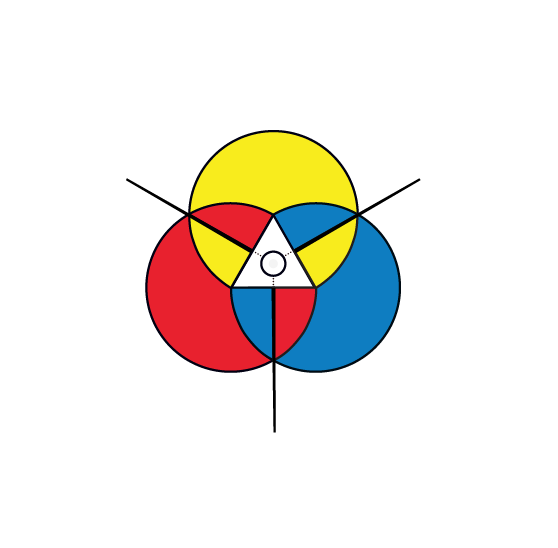
The Five Branches of the Great Way. The author identifies five branches, each corresponding to a stage of dealing with suffering, like five rungs of a single ladder or five grades of a single school, all serving the same ultimate goal of liberation:
- Humanity (Nhon Dao) — submits to suffering (tung kho): accepting birth, old age, sickness, and death, and the hardships of one’s station, while faithfully fulfilling one’s duties to family and society — as child, parent, spouse, master, servant, sibling, and citizen — without being broken by hardship or shamed by poverty.
- The Way of Spirits (Than Dao) — overcomes suffering (thang kho): the way of the warrior and soldier, who must defeat oppression and invasion, secure the homeland, and put down disorder and banditry so that the people may live in peace.
- The Way of Sages (Thanh Dao) — bears suffering (tho kho): taking on the mission of redeeming the suffering of humankind, even to the point of self-sacrifice — as Confucius’s teaching “to kill oneself in order to accomplish benevolence,” or as Jesus accepted crucifixion as an atonement for the sins of the world, out of boundless compassion.
- The Way of Immortals (Tien Dao) — dissolves suffering (giai kho): cultivation that runs contrary to worldly life but in accordance with natural principle, harmonizing spirit and vital energy to break every entanglement and reach a state of pure, non-active tranquility, since (citing the classical formula) “the mind of one person is the mind of Heaven and Earth; the principle of one thing is the principle of the ten thousand things” — so that a person who returns to unity with this principle shares in its permanence, as attested by stories in Chuang Tzu of adepts whose concentrated spirit could keep a place free from illness or ensure a good harvest, paralleling Mencius’s saying that a Sage’s mere passing transforms those he meets for the better.
- The Way of Buddhas (Phat Dao) — transcends suffering (thoat kho): going a stage further, seeking liberation from every entanglement of body or cosmos alike, reaching True Emptiness beyond form; yet Buddhas and Bodhisattvas, though free, never forget sentient beings still drowning in the sea of suffering, and continually manifest in the world to guide them toward the same enlightenment — for, as the saying goes, “Mind, Buddha, and sentient beings are not different” — a sentient being who cultivates becomes a Buddha, equal to the Buddha, so there is in truth no essential difference between them. The author adds that suffering itself should not simply be avoided at all costs — sometimes it must be accepted as “our teacher,” citing the Thien Lam Buu Huan (Precious Instructions of the Meditation Grove): only hardship sharpens resolve and deepens reflection, turning misfortune into blessing and matter into the Way.
Conclusion. The Five Branches share one goal, guiding humanity by stages toward complete, final mastery of both self and cosmos; each person must honestly assess their own level and circumstances and seek the appropriate stage of study, neither overreaching nor underreaching — illustrated by Chuang Tzu’s examples of the eel that thrives in damp lowland where a person’s back would ache, and the monkey that delights in heights that would terrify a person on a tree branch: each creature belongs to the teaching suited to its own nature. Advanced practitioners should not despise those still at an earlier stage; mutual help, not doctrinal rivalry, is what matters. True happiness lies not in arguing over theory but in binding people together in mutual love, working diligently to practice virtue, and thereby building a shared realm of peace — a foretaste of Nirvana within this very world. The sermon closes with prayers for the merit and lasting prosperity of Minh Thien Dao and its newly renovated temple.
With utmost sincerity and faith.